
In partnership with

🌟 Editor's Note: Recapping the AI landscape from 02/17/26 - 02/23/26.
🎇✅ Welcoming Thoughts
Welcome to the 32nd edition of NoahonAI.
What’s included: company moves, a weekly winner, AI industry impacts, practical use cases, and more.
Ben Nyx interview from last week is now live on Youtube
Fun interview this week live from Spain
Anthropic keeps releasing cool stuff and tanking stocks
Interesting Business Insider piece “Inside xAI”
Sam Altman made some strange remarks about training an AI consuming less energy than training a human.
Demis Hassabis (Google Deepmind CEO) cut his AGI timeline to 5-8 years
Bloomberg profiled the rise of Claude Code
The show Silicon Valley was very much ahead of its time
Goodbye Saas, Hello Raas (Robots as a Service).
Let’s get started—plenty to cover this week.
👑 This Week’s Winner: Anthropic // Claude
Back to Back for Anthropic. They dominated with a product-heavy week centered on enterprise security, agent capability, and legacy system disruption. This alongside some geopolitical pressure and global expansion in the backdrop. Here’s the latest:
Claude Code Security: Anthropic launched a limited preview of Claude Code Security, which scans entire codebases for vulnerabilities and suggests patches with human review. This is a fantastic move IMO. Granted, they are solving problems they helped create with the rise of vibe-coding.
Claude Sonnet Update: Sonnet 4.6 rolled out with stronger coding and agent planning plus a 1M-token context window (beta), built for large repos and long-running workflows. Cool, Sonnet is good for tasks that need less thinking. Lite version of industry leading Claude Opus.
Goodbye COBOL? Anthropic claims Claude Code can compress COBOL modernization timelines from years to quarters, a statement that tanked IBM stock by 10%. COBOL is one of the oldest programming languages, CC is helping phase it out. COBOL runs on IBM infrastructure.
But wait, there’s more: The Pentagon reportedly summoned CEO Dario Amodei for high-level talks over military use restrictions on Claude, underscoring defense pressure. Anthropic also expanded globally with a new Bengaluru office and a partnership with Infosys to push regulated enterprise agents. Meanwhile, the company accused Chinese labs like DeepSeek of large-scale Claude distillation attempts (training their models using Claude): framing it as both an IP and safety risk.

From Top to Bottom: Open AI, Google Gemini, xAI, Meta AI, Anthropic, NVIDIA.
⬇️ The Rest of the Field
Who’s moving, who’s stalling, and who’s climbing: Ordered by production this week.
🟢 OpenAI // ChatGPT
Frontier Alliance Launch: OpenAI partnered with BCG, McKinsey, Accenture, and Capgemini to help enterprises move AI agents from pilot to full deployment, focusing on integration, security, and ROI. Very strong move on the enterprise front. OpenAI clearly not scared of Anthropic.
India Push + Tata Deal: OpenAI launched a national India initiative and struck a major partnership with Tata, tying enterprise rollout to new data center capacity. Very large GPT base in India. Good moves on both ends.
Canada Summons: Canadian officials called OpenAI to discuss its escalation policies after the company did not alert authorities about a user later linked to a mass shooting. Tough situation all around.
⚪️ NVIDIA
India “AI factory” Push: NVIDIA partnered with Yotta and E2E Networks to deploy ~20,000 Blackwell Ultra GPUs in India, with Yotta planning a $2B+ AI hub by 2026 to support sovereign enterprise AI workloads. Heavy AI usage in India. NVIDIA taking advantage.
Exited Arm Equity Stake: NVIDIA sold its remaining Arm shares (~$140M), fully exiting ownership while continuing to license Arm IP for its CPU roadmap. Likely more of a portfolio move than signal. NVIDIA still an Arm user.
AI laptop chip push: NVIDIA is returning to PCs with chips that combine CPU and GPU for stronger on-device AI, expected in 2026 laptops, though pricing and compatibility could be challenges. This is excellent. Should allow for heavier local LLMs to run on PC’s.
🔵 Meta // Meta AI
Long-Term NVIDIA Deal: Meta secured multi-year access to NVIDIA GPUs, CPUs, networking, and security tech to keep scaling its AI data centers without supply risk. More compute for Meta.
Smartwatch Revival: Meta reportedly revived its “Malibu 2” smartwatch, targeting a 2026 launch with health tracking and built-in Meta AI. This is interesting. I don’t think enough companies have explored an “AI Watch”. Better than AI glasses or other physical products IMO.
Agent Safety Scare: A Meta AI researcher said an OpenClaw agent deleted emails despite stop commands, underscoring the risks of prompt-only safeguards in agent systems. As stated in last week’s interview, OpenClaw must be treated as a hostile employee for now!
🔴 xAI // Grok
Grok 4.2 Goes Multi-Agent: The 4.2 beta introduces parallel “multi-agent” reasoning paths that reconcile into one answer, signaling a shift toward more agent-style architecture. This is the direction the entire landscape is heading.
Grok Launches in Europe: Tesla’s latest update rolls Grok out to European vehicles via OTA, expanding natural-language assistant features beyond North America. Cool.
Saudi Stake Converts to SpaceX: Saudi-backed HUMAIN invested $3B in xAI, and that stake was later converted into SpaceX shares, giving it ownership in the combined Musk AI–space platform. Impactful for compute.
🟣 Google // Gemini
Gemini 3.1 Pro Rolls Out: Google launched Gemini 3.1 Pro across consumer, developer, and enterprise channels, positioning it as a stronger reasoning model for complex, multimodal work. Code-based animation looks improved.
Music generation in Gemini: Powered by Lyria 3, users can now generate short songs with lyrics and cover art inside the Gemini app, with SynthID watermarking included. Kinda silly but cool feature nonetheless.
Warning on “Thin Wrappers”: A Google VP cautioned that simple AI wrappers risk getting squeezed as model providers absorb the value, favoring deeper vertical products instead. He’s right. I see this a lot. Basic AI startup loses its value because of new feature from major LLM.
🤖 Impact Industries 🎓
Robotics // Toyota Humanoids
Toyota Motors (Canada) officially deployed seven humanoid robots at its Woodstock assembly plant after a successful year-long pilot. Operating under a Robots-as-a-Service model, these units unload auto parts to bridge gaps between production lines. This marks the first commercial humanoid deployment in Canadian automotive manufacturing. As Digit transitions from demonstration to genuine industrial production, Toyota joins global leaders like Amazon and GXO in scaling autonomous, humanoid-driven workflows within its largest manufacturing facilities.
Read the Story
Education // Harvard AI
Harvard Professor Michael Brenner redesigned his applied mathematics course after discovering AI could solve his entire graduate-level problem set. Instead of banning the technology, students were challenged to create "AI-resistant" problems that stumped existing chatbots. This experiment resulted in 600 unique problems and a co-authored academic paper. While the project successfully turned AI into a teaching tool, separate research highlights growing concerns over AI dependency, with nearly half of students struggling to limit usage. This is how you teach in the age of AI. Bravo.
Read the Story
🎙 Weekly Interview: 10 Minutes With Jens Ingelstedt

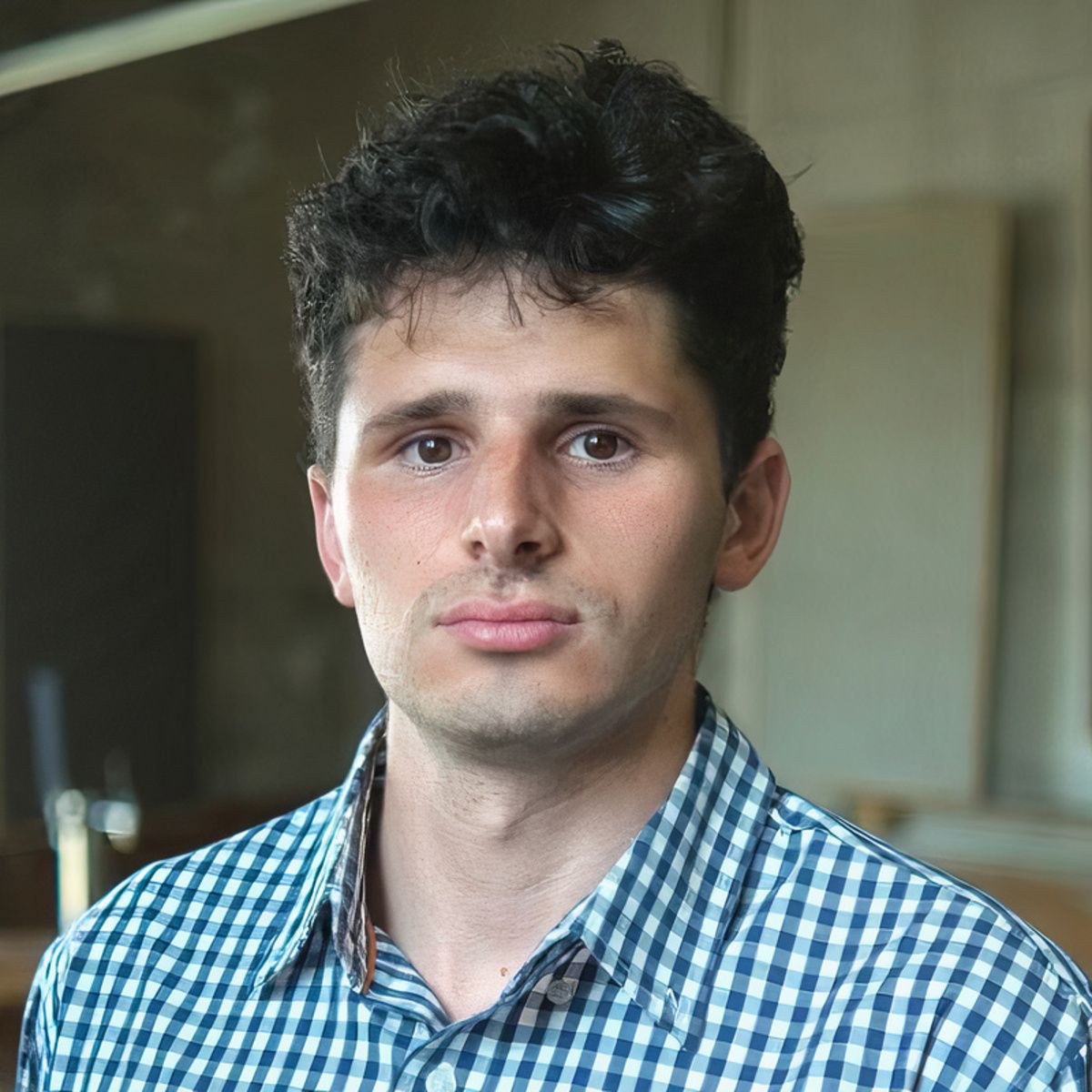
Jens Ingelstedt
🏠 Background: Jens Ingelstedt is an operational early-stage investor and connector with over 15 years of operator experience in sales, GTM, and expansion. He has managed accelerator programs for major VCs and corporations for nearly a decade and has executed over 150 AI-focused hackathons.
💼 Work: Jens is the founder of a stealth AI startup. He also serves as a Venture Partner at EWOR and Superangel, where he scouts outliers and provides fractional GTM support for pre-seed startups. Jens specializes in building modular tech stacks for organizations, ensuring tools are constantly evaluated to maintain a competitive edge.
🚀 Quote: "The US is better at hyping new technologies and creating FOMO, but Europe has started to wake up."
🎙️ Condensed Interview Highlights — Jens Ingelstedt
Noah: What has been your experience using vibe coding platforms like Lovable?
Jens Ingelstedt: I use Lovable for prototyping quite a bit. It is already at the stage where a non-technical person can build a semi-complex, fully working backend and structure. I think the arguments against "vibe coding" are going to disappear over time as it becomes more stable and secure.
Noah: What is the most exciting part of the AI space for you personally?
Jens Ingelstedt: I love new shiny objects and the intersection between humans and machines. It triggers the "kid" within us all; it is highly creative and engaging because you can do tangible stuff in a very short amount of time.
Noah: Are VCs leading the way in adopting these tools?
Jens Ingelstedt: It is contradictory, but a lot of VCs are actually less advanced than you think. Many don't have the budget or internal systems to spend on the latest tooling. The ones late to the game will have a difficult time finding outliers because they have to rely on non-scalable methods like attending events in person.
Noah: How does the European AI landscape compare to the US?
Jens Ingelstedt: The US is better at hyping new technologies and creating FOMO. There is a bigger risk appetite there for companies to buy from startups. However, Europe has started to wake up, focusing on reducing administration and making it easier for founders to stay and build locally.
Noah: What is the core problem your new stealth startup is solving?
Jens Ingelstedt: In this fast-moving space, you need to be close to the top talent to see who can actually take these technologies and do something quickly. We are building a copilot for organizers to run innovation projects where they can focus on both the outcome and the process to see who is truly talented.
👨💻 Practical Use Case: Choosing the Right LLM Subscription Tier
Difficulty: Beginner
I sometimes hear cases where people are not getting what they’re looking for out of AI tools, and the first few questions I ask are:
1. Which tools/LLM are you using?
2. What subscription tier are you on?
The second often matters just as much as the first. Your plan controls how much you can use the model, which reasoning modes you unlock (how smart it is), how large your context window is (how much it remembers), and whether advanced tools like video or coding agents are available.
Here’s how the major platforms break it down.
ChatGPT (OpenAI)
Go ($8/mo) – Higher limits than Free, but no advanced “Thinking” models and no Sora video. Ads.
Plus ($20/mo) – The standard tier. Unlocks GPT-5.2 Thinking, Sora (video generation), and DALL-E 3. No Ads.
Pro ($200/mo) – The power-user tier. Unlimited access to o1 Pro mode (deep reasoning) and highest-priority access to flagship models. No Ads.
Team ($25–30/user) – Private workspace, admin controls, and your data is not used for training. No Ads.
For most users, Plus is enough. If you’re running heavy research, advanced reasoning, or using AI all day, Pro removes usage friction quickly. I use Plus.
Claude (Anthropic)
Pro ($20/mo) – 5× the usage of Free. Access to Claude 4.5 Sonnet and Google Workspace integrations.
Max ($100 or $200/mo) – 5× Pro usage at $100, 20× at $200. Includes Claude Code and Extended Thinking for large logic tasks.
Team ($25–30/user) – Shared Projects and centralized knowledge bases for teams. Max usage is not automatically included.
Claude’s higher tiers matter most for long-context analysis, coding, and agent-style workflows. If you use Claude (as you should), you’ll likely end up as a Team or Max user because of usage amount + data protections. I use both.
Gemini (Google)
AI Pro ($19.99/mo) – Access to Gemini 3.0 Pro with a 1 million token context window. Includes 5 Deep Research reports per month.
AI Ultra ($249.99/mo) – Nearly unlimited research reports, Veo 3.1 video generation, and 1,000+ image generations per day.
Business/Enterprise ($20–30/user) – Adds Gemini directly into Gmail, Docs, and Sheets inside Workspace.
The higher Gemini plans are meant for those who spend a lot of time doing research. I use Pro, which is just fine for most tasks.
For most independent users, the $20 tiers are the best bang for your buck. If you’re using it at work, the Team options are the safest for data protection. The jump to the $100–$200 tiers is effectively the business upgrade when AI becomes part of daily operations rather than an occasional assistant.
Learn More Below ⬇️
👤 Startup Spotlight

Humans&
Humans& — The "Human-Centric" Collaborative AI.
The Problem: The current AI paradigm is focused on autonomy: building models that can work for 50 hours straight to replace a human task. This creates "black box" tools that are often disconnected from actual human intent and threaten to automate workers out of the loop rather than making them better at their jobs.
The Solution: Humans& is building "AI with curiosity and memory." Rather than a standalone chatbot, their software is designed to slot into group messaging environments to facilitate collaboration. It acts as a digital teammate that asks clarifying questions, remembers long-term project details, and handles machine-heavy tasks (like complex web searches) in real-time alongside a human team.
The Backstory: Launched in late 2025/early 2026 by an "AI Avengers" team, the company includes former leaders from Anthropic (Andi Peng), Google’s early team (Georges Harik), and xAI (Eric Zelikman). Despite being only three months old with 20 employees, they’ve raised a massive $480 million seed round from Nvidia and Jeff Bezos, valuing the company at $4.48 billion.
My Thoughts: In the current state of fundraising, this team could probably raise half a billion dollars pre-idea. With that being said, the concept strikes me as essentially what OpenClaw is supposed to one day become (sans the security risk). A virtual teammate that can operate just as a human would, and (this the key), retain full context and memory. Excited to see what it becomes.
“It’s not likely you’ll lose a job to AI. You’re going to lose the job to somebody who uses AI”
- Jensen Huang | NVIDIA CEO
Anybody have a good idea for an AI company name? Shoot me an email. Till Next Time,
Noah on AI